See through different eyes
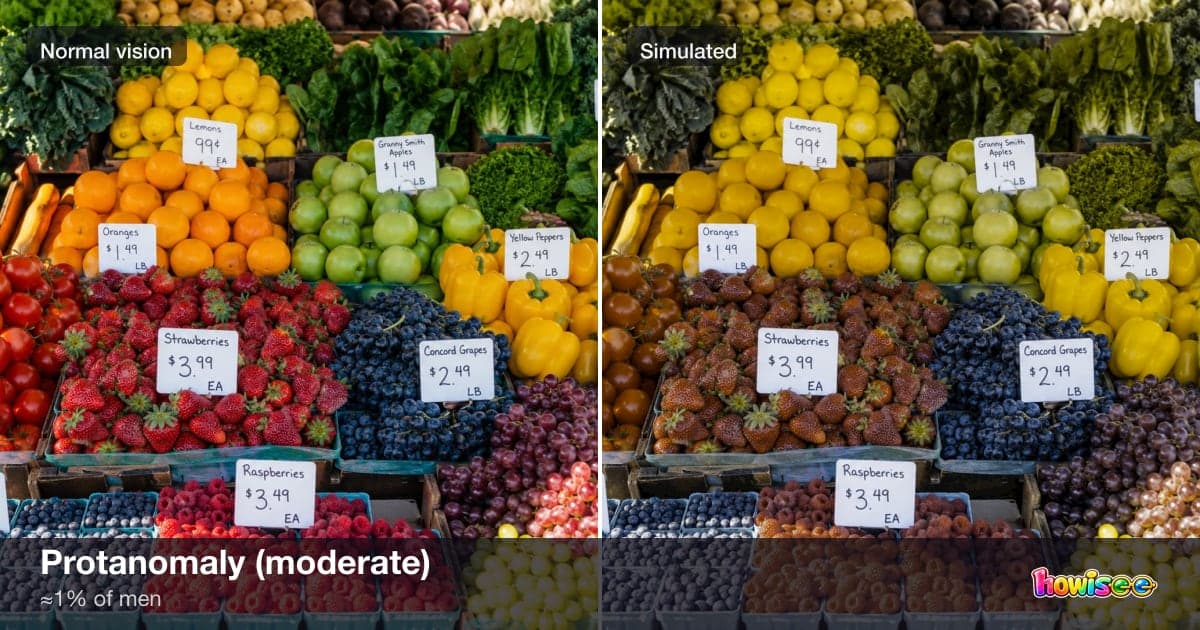
What Protanomaly (moderate) looks like
A milder red-weak shift; some reds and greens become confusable.
≈1% of men · NEI · Learn more
What it is
The red-sensitive cones are present but their peak sensitivity has shifted toward green, so the red and green signals overlap more than they should. All three cone types still work, which is why this is called anomalous trichromacy rather than dichromacy. The result is a compressed rather than a missing colour axis.
What it looks like day to day
Reds look muted and darker than expected, and distinguishing red from green or brown takes longer and depends more on lighting. Many people with mild protanomaly get through life without realising anything is different, having simply learned which colours are unreliable for them.
What helps
Good lighting makes a real difference, since the harder the discrimination the more it depends on a strong signal. Beyond that, the usual approaches: labels rather than colour codes, and asking or checking with a phone when a colour genuinely matters.
Who it affects
Around 1% of men, X-linked and present from birth. Severity varies widely between individuals, from barely detectable to nearly as pronounced as protanopia.
Related conditions
Explore every condition or learn about color blindness.
This is an approximation, not a medical diagnosis.