See through different eyes
What Macular degeneration looks like
Central blind spot
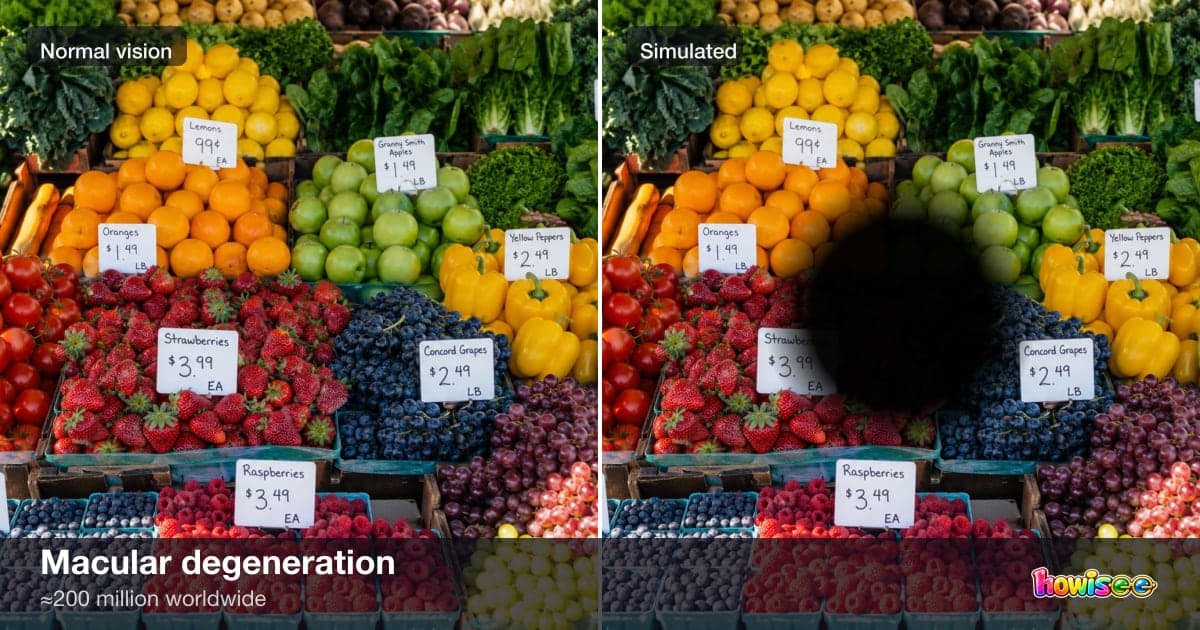
≈200 million worldwide · NEI · Learn more
What it is
The macula, the small central patch of retina responsible for fine detail and most of what you look directly at, deteriorates. Peripheral vision is largely spared, so it takes away precisely the part of vision used for reading and recognising faces while leaving the ability to move around comparatively intact.
What it looks like day to day
A blurred or blank patch sits wherever you are looking, moving with your gaze so it cannot be looked around directly. Straight lines can appear bent or wavy, often noticed first on door frames or tiles. Reading and recognising faces become difficult while general navigation remains possible, which is a combination people find hard to explain to others.
What helps
Magnifiers, high-contrast displays, screen readers and eccentric viewing techniques, which means learning to use a healthier patch of retina slightly off-centre. For the wet form there are injected treatments that can slow or partly reverse loss, which is why a sudden change is treated urgently.
Who it affects
Around 200 million people worldwide. Age is the dominant risk factor, alongside smoking, genetics and family history.
Related conditions
Explore every condition or learn about color blindness.
This is an approximation, not a medical diagnosis.