See through different eyes
What Glaucoma looks like
Peripheral vision loss
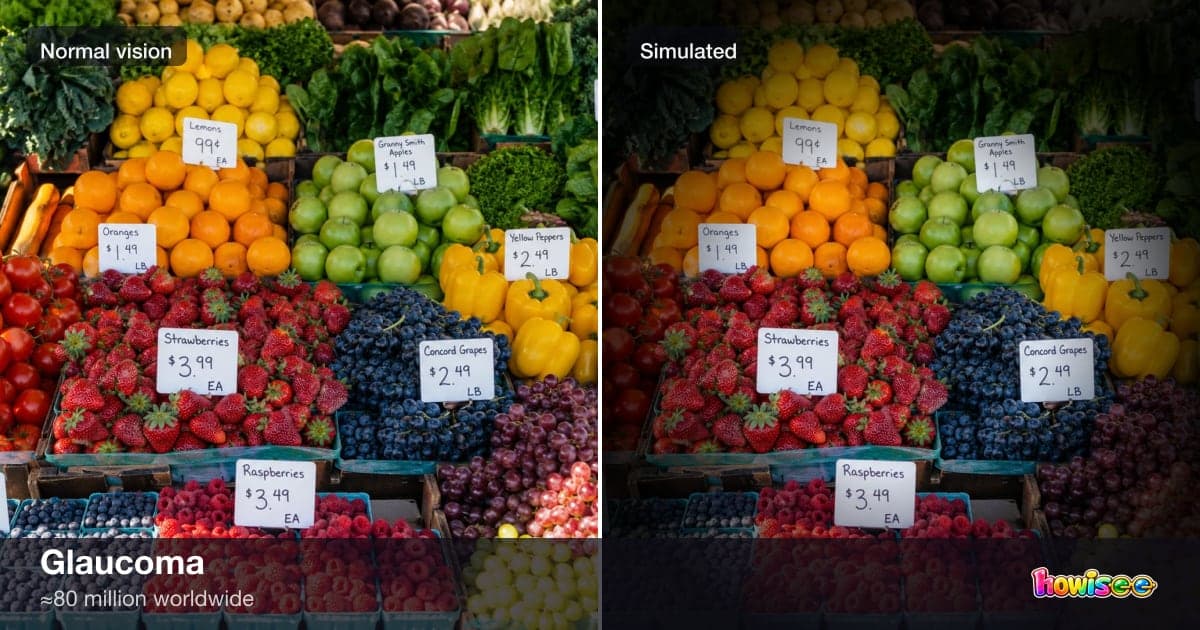
≈80 million worldwide · NEI · Learn more
What it is
A group of conditions that damage the optic nerve, the cable carrying the image from eye to brain. It is often, though not always, associated with raised pressure inside the eye. Damage begins at the periphery of the visual field and works inward.
What it looks like day to day
The most striking thing about early glaucoma is how little there is to notice. The brain fills in missing peripheral field so convincingly that substantial loss can go unremarked, and it is usually detected in an eye examination rather than by the person who has it. Later, the effect is like looking through a narrowing tube, with difficulty in low light and a tendency to bump into things at the edges.
What helps
Lost vision does not come back, which is why detection matters so much: treatment, usually drops or surgery to lower eye pressure, is aimed at stopping further loss. Regular eye examinations are how most cases are found, particularly for people with a family history.
Who it affects
Around 80 million people worldwide. Risk rises with age and is higher for people with a family history, and for people of African or Asian descent depending on the type.
Related conditions
Explore every condition or learn about color blindness.
This is an approximation, not a medical diagnosis.