See through different eyes
What Retinitis pigmentosa looks like
Tunnel vision from progressive peripheral loss
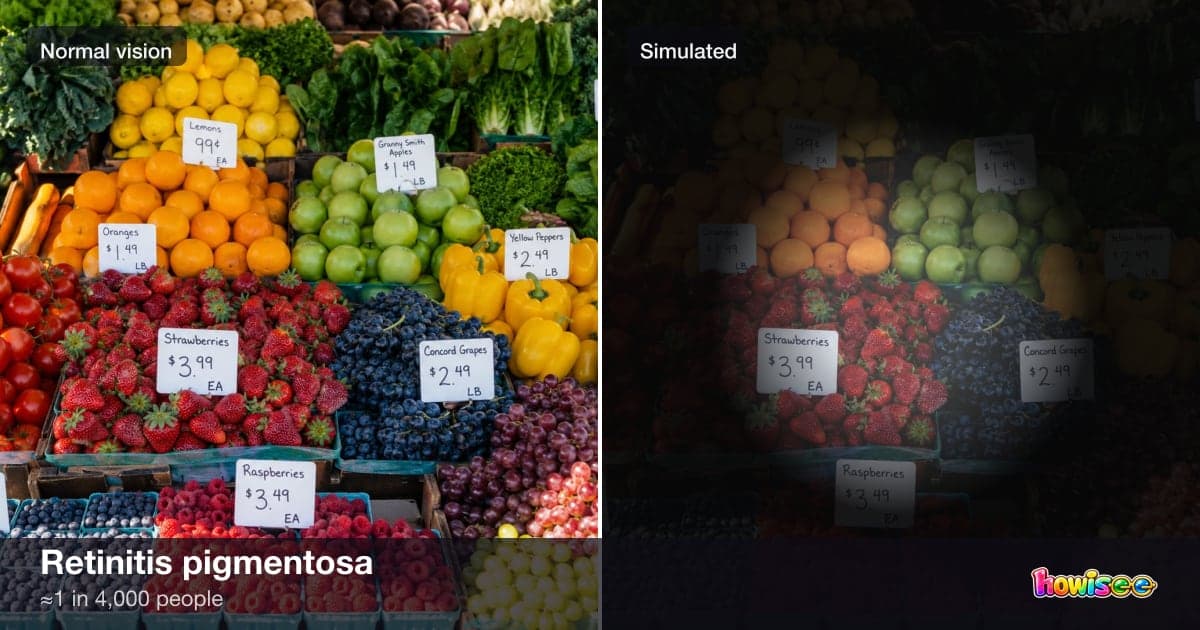
≈1 in 4,000 people · NEI · Learn more
What it is
An inherited group of conditions in which the light-sensing cells of the retina progressively break down. The rods, which handle low light and peripheral vision, are usually affected first and worst, with the cones following later.
What it looks like day to day
Night vision goes first, often in childhood or adolescence: dim restaurants and unlit streets become difficult long before anything else does. The visual field then narrows over years, producing a tunnel effect, so obstacles at the edges go unseen while central detail can stay sharp for a long time. Adjusting between bright and dim rooms takes noticeably longer.
What helps
Mobility training, high-contrast environments and good task lighting are the practical mainstays. Gene therapy exists for one specific genetic form, and research into others is active, which is why genetic testing is often offered.
Who it affects
About 1 in 4,000 people. It is inherited, though the pattern varies between families, and many people have no known family history.
Related conditions
Explore every condition or learn about color blindness.
This is an approximation, not a medical diagnosis.