See through different eyes
What Diabetic retinopathy looks like
Blurry, patchy vision with dark spots
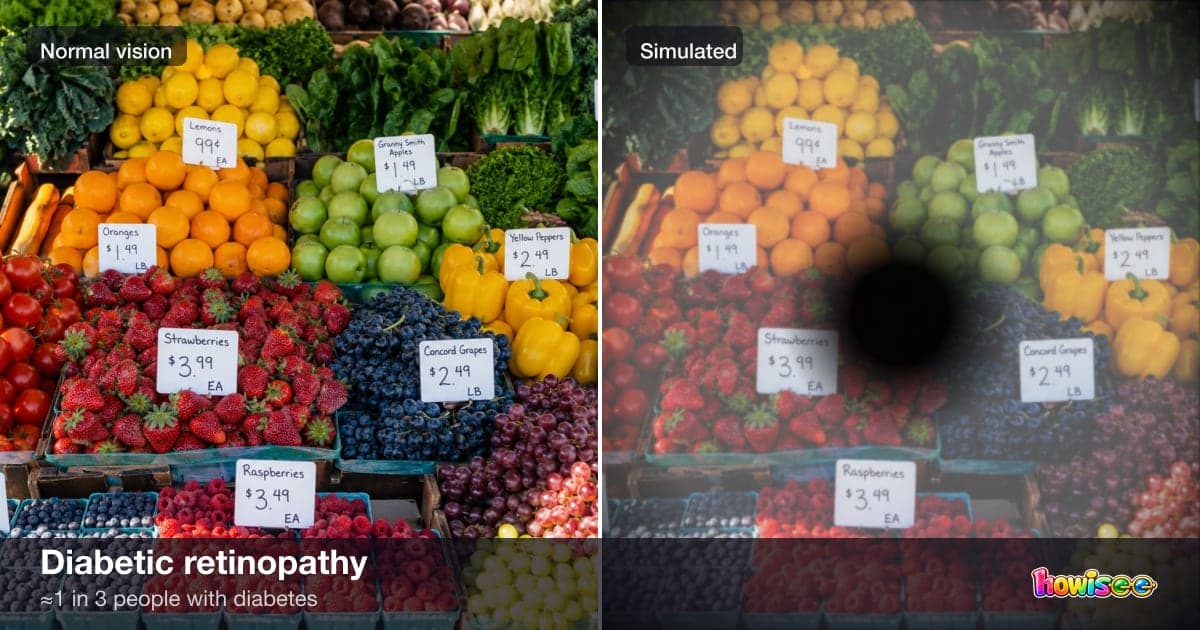
≈1 in 3 people with diabetes · NEI · Learn more
What it is
Persistently high blood sugar damages the small blood vessels feeding the retina. They leak, swell, and eventually close off, and the retina may grow fragile new vessels that bleed. Damage accumulates over years, usually without symptoms in the early stages.
What it looks like day to day
Patchy blur, dark floating spots and blank areas that come and go, with vision that varies from day to day rather than settling at a fixed level. Reading may be fine one week and difficult the next. Night vision and colour discrimination often decline before anything obvious happens to central sharpness.
What helps
Blood sugar and blood pressure control slow the underlying damage, and laser treatment or injections are used to address vessel changes once they appear. Because it is symptomless early on, people with diabetes are offered regular retinal screening specifically to catch it before it is noticeable.
Who it affects
Around one in three people with diabetes have some degree of it. Duration of diabetes is the strongest predictor, which makes it common among people who developed diabetes young.
Related conditions
Explore every condition or learn about color blindness.
This is an approximation, not a medical diagnosis.