See through different eyes
What Presbyopia looks like
Age-related difficulty focusing up close
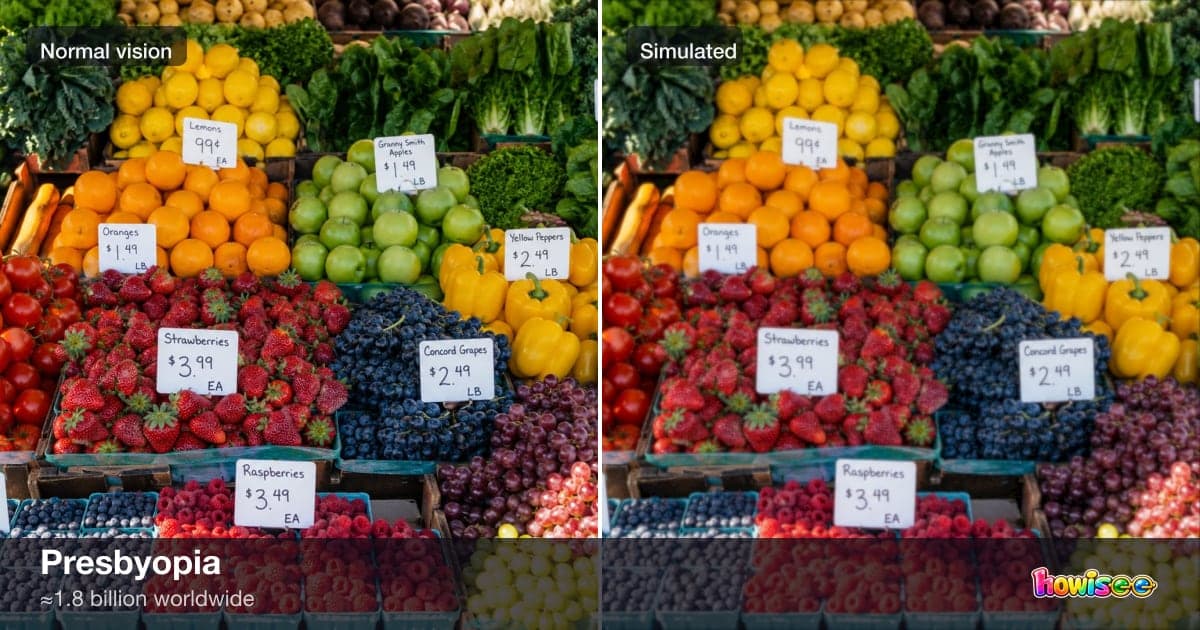
≈1.8 billion worldwide · Wikipedia · Learn more
What it is
The lens inside the eye stiffens gradually throughout life, losing the ability to change shape and pull near objects into focus. This is not damage or disease; it is a change that happens to everyone, and it becomes noticeable when the remaining flexibility no longer covers reading distance.
What it looks like day to day
Menus, phone screens and labels move further away to stay legible, and small print becomes markedly easier in bright light, since a smaller pupil deepens the range in focus. Reading is more tiring than it was, and switching between near and far takes a moment.
What helps
Reading glasses, bifocals, varifocals and multifocal contact lenses all address it, and lens replacement surgery is an option for some. Brighter light on the page is a genuinely effective and often overlooked adjustment.
Who it affects
Effectively everyone, usually becoming noticeable in the early-to-mid forties. Around 1.8 billion people worldwide are estimated to have it.
Related conditions
Explore every condition or learn about color blindness.
This is an approximation, not a medical diagnosis.