See through different eyes
What Cataracts looks like
Cloudy, yellowed vision
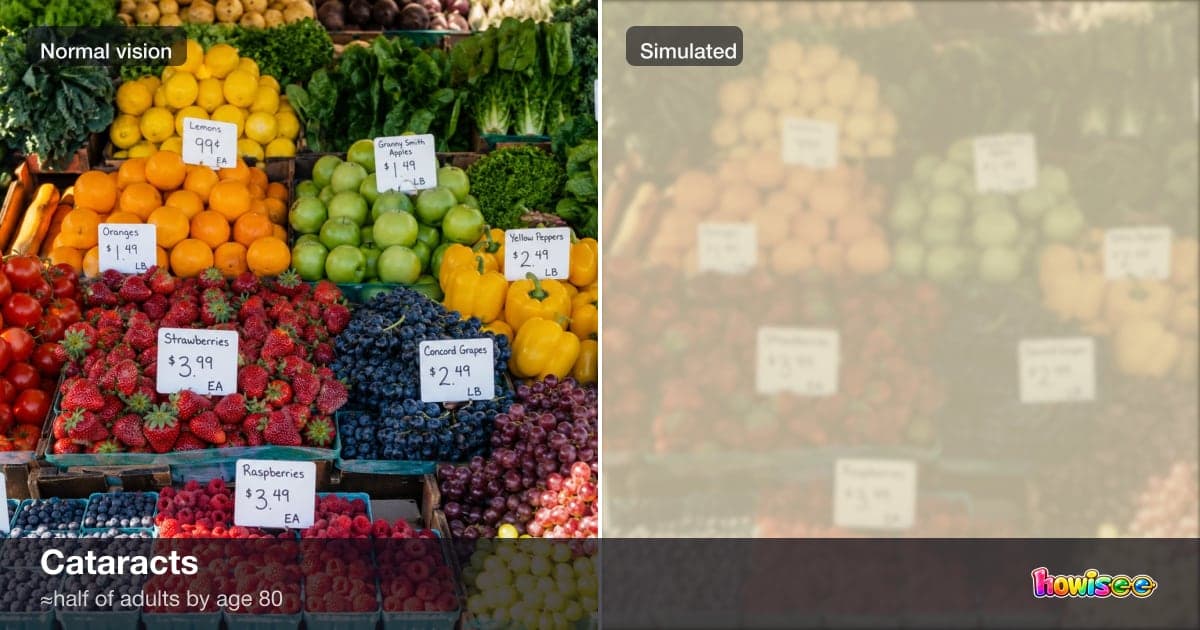
≈half of adults by age 80 · NEI · Learn more
What it is
The lens inside the eye, normally clear, becomes cloudy as its proteins clump together over time. Light is scattered rather than focused cleanly, so the image loses contrast and takes on a yellow-brown cast as the lens progressively filters out shorter wavelengths.
What it looks like day to day
Everything looks slightly hazy, as though seen through a smeared window, and colours are muted and warmed. Glare is the common complaint: oncoming headlights and low sun scatter across the whole field rather than staying where they are. Blues in particular become harder to distinguish as the lens yellows.
What helps
Cataract surgery replaces the clouded lens with a clear artificial one and is among the most commonly performed operations in the world. Before that point, brighter light, anti-glare lenses and updated glasses prescriptions all help.
Who it affects
About half of adults have some degree of cataract by age 80. Age is the main factor, with diabetes, smoking, prolonged sun exposure and some medications contributing.
Related conditions
Explore every condition or learn about color blindness.
This is an approximation, not a medical diagnosis.