See through different eyes
What Farsighted (hyperopia) looks like
Near objects appear blurry
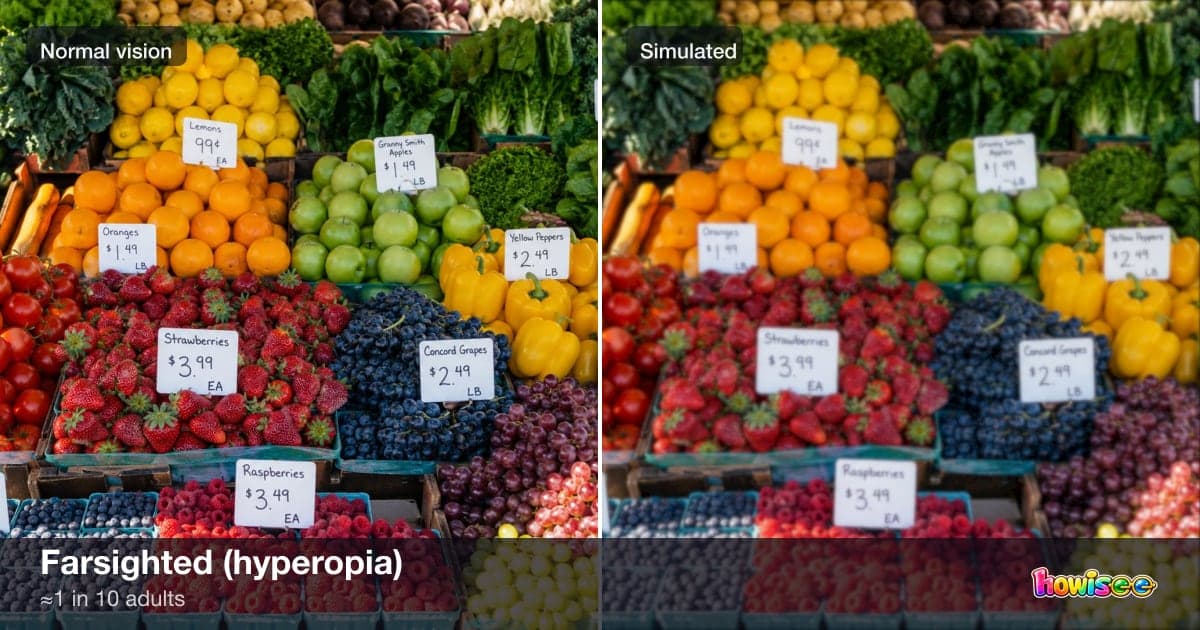
≈1 in 10 adults · NEI · Learn more
What it is
Light comes to a focus behind the retina rather than on it, typically because the eyeball is slightly too short. The eye can compensate by flexing its lens, which is why mild hyperopia often produces no blur at all, only effort.
What it looks like day to day
Close work is where it shows: reading, phones, and detailed tasks blur or become tiring. Because young eyes can focus their way past it, the first sign is often eye strain, headaches after reading, or a reluctance to read rather than obvious blur.
What helps
Glasses or contact lenses do the focusing the eye would otherwise have to do itself, which usually removes the strain as well as the blur. Laser surgery is an option for some adults.
Who it affects
Around one in ten adults, though estimates vary because mild cases are often compensated for and never measured. It becomes more noticeable with age as the lens loses flexibility.
Related conditions
Explore every condition or learn about color blindness.
This is an approximation, not a medical diagnosis.